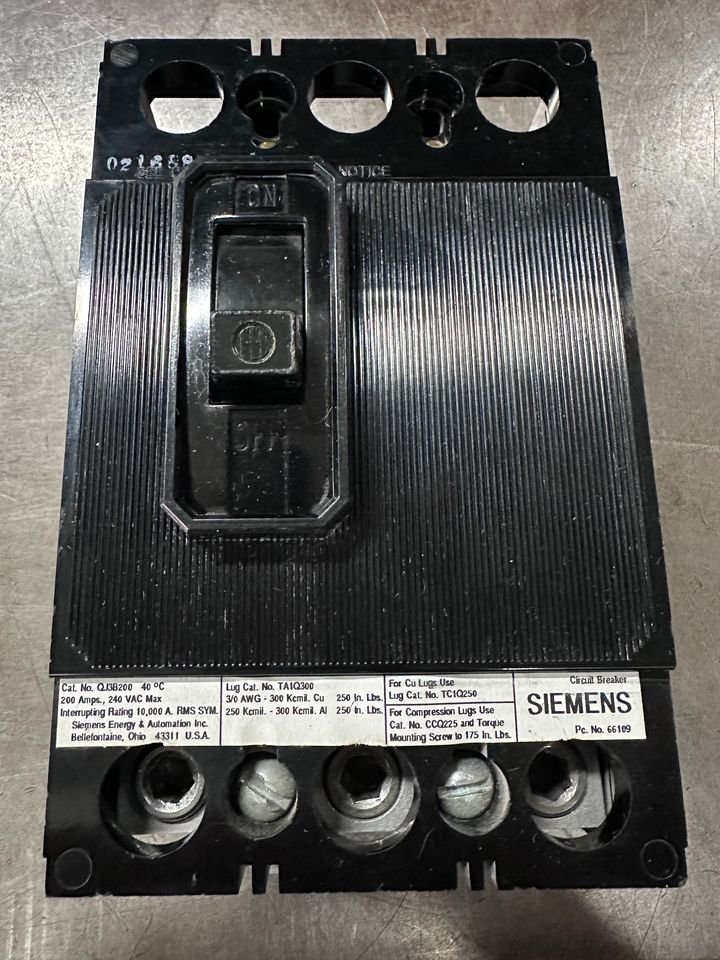
Need a discontinued, obsolete, or hard-to-find circuit breaker? Electrical Supplies Unlimited (ESU) specializes in locating and supplying hard to find circuit breakers in San Diego for residential, commercial, and industrial electrical systems. With over 40 years of experience and an extensive inventory of new, used, surplus, and obsolete electrical equipment, we help electricians, contractors, facility managers, and property owners find replacement breakers that many suppliers can no longer source.
Whether you need a replacement breaker for an older panel, a discontinued manufacturer, or a specialized industrial application, ESU is one of San Diego's trusted sources for difficult-to-find electrical components.
Why Are Some Circuit Breakers Difficult to Find?
Many electrical panels remain in service for decades after manufacturers discontinue production. As equipment ages, replacement breakers become increasingly difficult to locate through traditional electrical distributors.
Common reasons circuit breakers become hard to find include:
Manufacturer discontinuation
Panel systems no longer in production
Limited inventory availability
Specialized commercial or industrial applications
Obsolete electrical equipment
Older residential electrical panels
Fortunately, ESU maintains inventory and supplier relationships that allow us to locate many discontinued and hard-to-find breaker models.
Popular Hard-to-Find Circuit Breaker Brands
We frequently help customers locate replacement breakers for older and discontinued systems, including:
Federal Pacific (FPE)
Zinsco
Challenger
Pushmatic
Bulldog
Bryant
Westinghouse
Sylvania
ITE Siemens Legacy Models
Crouse-Hinds
General Electric (GE)
Square D Obsolete Models
Our inventory changes regularly, so if you cannot locate a breaker elsewhere, contact our team for assistance.
Replacement Breakers for Obsolete Electrical Panels
Many older homes and commercial buildings throughout San Diego still contain electrical panels that require obsolete circuit breakers. Rather than replacing an entire electrical panel, many property owners choose to source compatible replacement breakers when repairs or maintenance are required.
Hard to Find Commercial and Industrial Circuit Breakers
Commercial and industrial facilities often utilize specialty circuit breakers that are not commonly stocked by local suppliers. ESU can assist with locating:
3-Phase Circuit Breakers
480 Volt Circuit Breakers
Molded Case Circuit Breakers
Bolt-On Circuit Breakers
Panelboard Breakers
Industrial Distribution Equipment
Medium Voltage Breakers
We understand the urgency of keeping electrical systems operational and work to locate replacement equipment as quickly as possible.
Common Signs You Need a Replacement Breaker
If you are searching for a replacement breaker, you may already be experiencing signs of breaker failure.
Electrical contractors throughout San Diego rely on ESU because we offer:
Over 40 years of electrical industry experience
Large inventory of new and used breakers
Obsolete and discontinued breaker sourcing
Residential, commercial, and industrial products
Knowledgeable electrical supply specialists
Fast turnaround on difficult-to-find items
Our team understands electrical equipment and can often help identify compatible replacements even when model numbers are difficult to read or no longer available.
Hard to Find Circuit Breakers in San Diego
Electrical Supplies Unlimited proudly serves electricians, contractors, property managers, facilities maintenance teams, and homeowners throughout San Diego County. We maintain one of the area's most diverse inventories of circuit breakers and electrical equipment.
If you're searching for a hard-to-find breaker, obsolete breaker, discontinued breaker, or replacement electrical component, contact ESU today. Chances are we either have it in stock or can help locate it.
Tandem Circuit Breakers: What They Are and When to Use Them
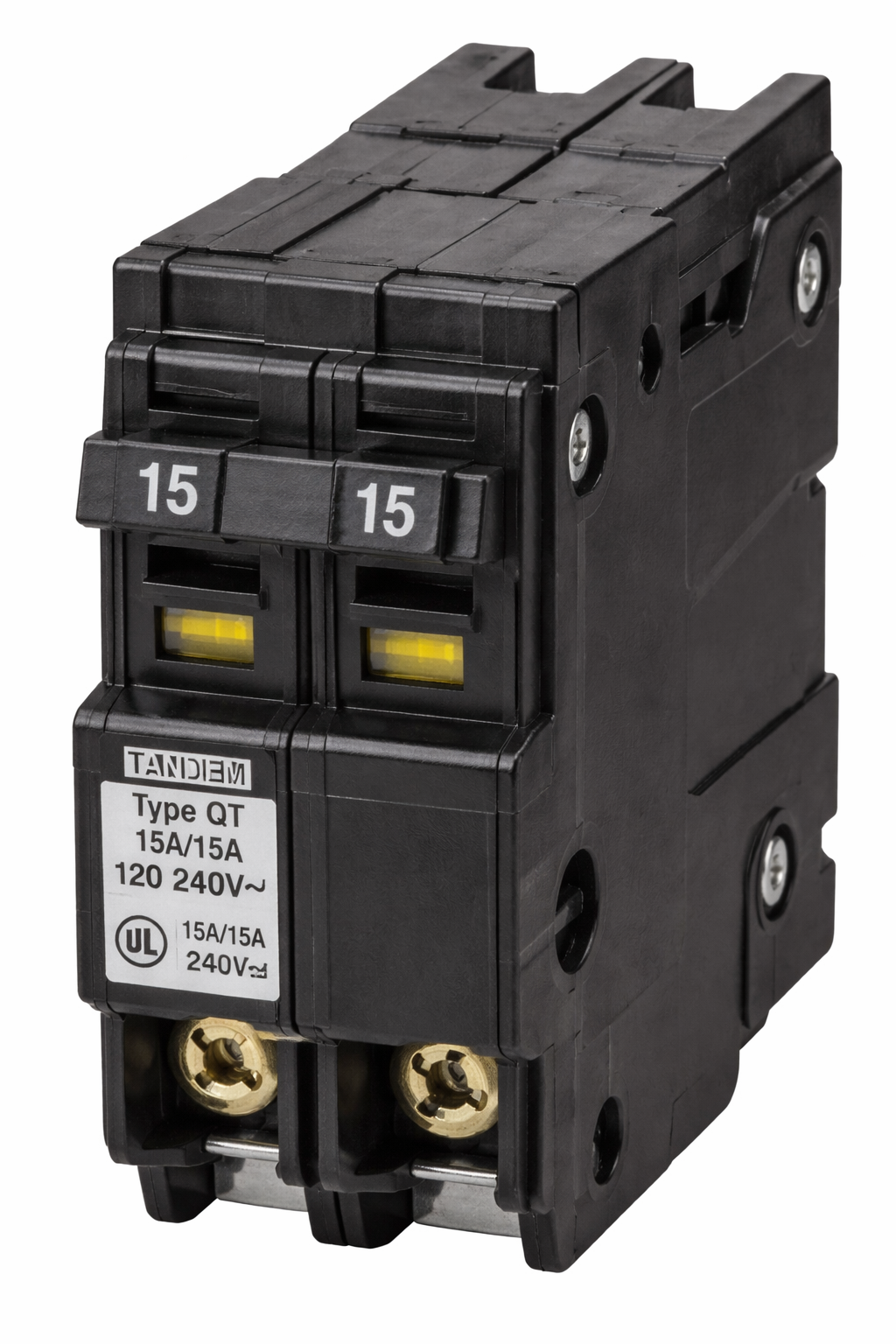
A tandem circuit breaker is a special type of breaker that allows two separate circuits to be installed in a single slot within an electrical panel. These breakers are often used when a panel runs out of space but additional circuits are needed.
Understanding how tandem breakers work, when they are allowed, and whether they are safe is essential for homeowners, electricians, and contractors working with residential electrical systems.
What Is a Tandem Circuit Breaker?
A tandem circuit breaker (sometimes called a “double” or “cheater” breaker) combines two individual breakers into one unit that fits into a single panel slot. Each circuit operates independently, providing the same protection as a standard single-pole breaker.
This allows an electrical panel to support more circuits without physically expanding the panel.
When Are Tandem Breakers Used?
Tandem breakers are typically used when an electrical panel has no available space for additional circuits. Common situations include:
Home renovations or additions
Installing new appliances or equipment
Adding circuits for kitchens, garages, or HVAC systems
Upgrading electrical capacity without replacing the panel
They provide a convenient solution when space is limited, but they are not always the best long-term option.
Are Tandem Circuit Breakers Safe?
Yes, tandem circuit breakers are safe when used correctly and installed in panels that are specifically designed to accept them. Electrical panels have a maximum number of circuits they can safely handle, and tandem breakers should only be used within those limits.
Installing tandem breakers in a panel that is not rated for them can lead to overheating, code violations, and potential electrical hazards.
Are Tandem Breakers Legal?
Tandem breakers are legal when used in accordance with the panel manufacturer’s specifications and local electrical codes. Most panels include labeling that indicates how many tandem breakers are allowed and in which positions they can be installed.
If too many circuits are added beyond the panel’s rating, it may be necessary to upgrade the panel instead.
Tandem Breaker vs Standard Breaker
Understanding the difference between tandem and standard breakers is important when planning electrical upgrades:
Standard Breaker: Occupies one slot and controls one circuit
Tandem Breaker: Occupies one slot but controls two separate circuits
While tandem breakers increase circuit capacity, they do not increase the total electrical load capacity of the panel.
Tandem Breakers vs Double-Pole Breakers
Tandem breakers are sometimes confused with double-pole breakers, but they serve different purposes:
Tandem Breaker: Two independent 120V circuits
Double-Pole Breaker: One 240V circuit for large appliances
Using the correct type of breaker is critical for proper electrical system function.
When You Should Upgrade Your Electrical Panel
If you find yourself needing multiple tandem breakers to add circuits, it may be a sign that your panel is undersized for your electrical needs. In these cases, upgrading to a larger panel may be the safer and more reliable solution.
Selecting the correct breaker for your panel ensures safe and reliable operation. Breakers must be compatible with your panel brand and rated for the correct electrical load.
For additional information on breaker types, troubleshooting, and electrical safety, visit our Circuit Breaker Resource Hub.
Circuit Breakers Clairemont San Diego
Circuit Breakers Clairemont San Diego
Circuit Breakers Clairemont San Diego – New & Used Breakers, Panels & Electrical Supplies
Electrical Supplies Unlimited (ESU) is your trusted source for Circuit Breakers Clairemont San Diego, serving contractors, electricians, property managers, and homeowners throughout Clairemont and surrounding communities including Pacific Beach, La Jolla, Del Mar, Sorento Valley, Hillcrest, Golden Hill, Bankers Hill, and greater San Diego County.
We buy and sell both new and used circuit breakers, electrical panels, transformers, and electrical equipment. Whether you need replacement breakers, obsolete breakers, or hard-to-find electrical components, ESU provides dependable solutions backed by over 40 years of industry experience.
San Diego’s Trusted Circuit Breaker Supplier Since 1985
ESU has proudly served the San Diego electrical supply industry for more than four decades. As a fully stocked electrical distributor and wholesaler, we carry a wide range of residential, commercial, and industrial electrical supplies designed to meet virtually any project requirement.
Our experienced team specializes in locating discontinued, surplus, and specialty electrical products, helping customers source reliable solutions quickly and efficiently.
Leading Circuit Breaker Brands Available
Our extensive inventory includes major circuit breaker manufacturers and trusted industry brands, including:
General Electric (GE), Siemens / ITE, Cutler Hammer, Square D, Federal Pacific (FPE), Pushmatic, Zinsco, Challenger, Bryant, Westinghouse, Sylvania, Crouse Hinds, Bulldog, and many more.
Complete Electrical Supply Inventory
In addition to circuit breakers, ESU stocks a large inventory of:
Transformers
Panelboards up to 600V
Disconnects & Safety Switches
Fuses up to 3000 Amps
Meter Sockets
Motor Starters & Relays
Lighting Ballasts & Fixtures
Bolt Switch Pullouts
Commercial & Residential Electrical Supplies
We also offer Greenlee tool rentals, conduit benders, wire pullers, and additional electrician equipment for contractors throughout San Diego County.
Specialists in New, Used & Obsolete Circuit Breakers
ESU is San Diego’s go-to source for new, used, surplus, and obsolete circuit breakers. We carry a broad range of amperages and voltages for nearly every major electrical system.
Examples of our inventory include:
20 Amp to 125 Amp Zinsco breakers
15 Amp to 100 Amp Pushmatic breakers
20 Amp to 1200 Amp Siemens breakers
15 Amp to 1200 Amp Federal Pacific (FPE) breakers
Single-phase and 3-phase commercial breakers
Whether you need residential breaker replacements, commercial electrical upgrades, or industrial breaker solutions, our knowledgeable staff can help you select the right product for your project.
Serving Clairemont & Greater San Diego
We proudly provide circuit breakers and electrical supplies throughout:
La Jolla
Del Mar
Cardiff
Encinitas
Vista
Oceanside
Carlsbad
San Marcos
All San Diego County
We also ship many products nationwide for customers outside the San Diego region.
Your Local Circuit Breaker Experts
At Electrical Supplies Unlimited, we combine decades of electrical supply expertise with one of the region’s most diverse inventories of circuit breakers and electrical equipment.
Call ESU today at 858.558.2850 to speak directly with one of our electrical supply specialists and find the right circuit breaker or electrical solution for your needs.
Circuit Breakers in San Diego
Circuit Breakers in San Diego! ESU buys and sells new & used Breakers and Panels!
Electrical Supplies Unlimited buys and sells new & used Circuit Breakers San Diego in San Diego surrounding areas including Hillcrest, Northpark, City Heights, Mission Valley, National City and many more. Of course, we can arrange shipment on a wide variety of products to service those outside our area. We will also buy your used Transformers.
ESU Inc has proudly served the electrical supply industry for more than 40 years. We carry a wide selection of new, surplus, and recycled electrical supplies for both residential and commercial needs. As a fully stocked Electrical Distributor and Wholesaler, we maintain many different product lines on hand. We specialize in locating hard-to-find items, and our experienced staff is committed to going above and beyond customer expectations. Our reputation speaks for itself—just ask around, or give us a call at 858.558.2850 to experience it firsthand.
Our inventory includes most leading brands such as General Electric, Hammond Power, ITE Siemens, Cutler Hammer, Square D, FPE Federal Pacific, Pushmatic, Zinsco, Crouse Hinds, Challenger, Westinghouse, Sylvania, and Bryant.
Our inventory consists of a large selection of Circuit Breakers, Transformers, Disconnects, Panelboards to 600v, Fuses up to 3000 Amps, Bolt Switch Pullouts, Motor Starters and Relays, Meter sockets, Lighting ballasts, Metal Halide and Sox bulbs. We also carry Lithonia Commercial and residential lighting fixtures as well.
Our Products ESU sells a large and diverse inventory of Electrical Supplies, Electrical Equipment, including Circuit Breakers, Fuses, Transformers, Panelboard switches, Safety switches, Fuseable switches, Meter Sockets, Motor Controllers, Lighting Ballasts, Bolt switch and much more. We carrier almost all manufacturers including Zinsco, Pushmatic, FPE Federal Pacific, ITE Siemens, Cutler Hammer, Lutron, Lithonia,, Square D, Challenger and many more. We serve the San Diego and SD County areas and to many other intra and interstate clients. We sell products to fit any requirement or budget. ESU rents Greenlee Wire Pullers, Conduit benders as well as other electrician tools. Talk directly to one of our specialists, Ed, Scott, Kevin or Chris to find out more. So give us a call today at 858.558.2850 and let us serve you
Circuit Breakers Electrical Supplies Unlimited sells and buys both new and used Circuit Breakers, serving San Diego and nearby areas such as Sorrento Valley, La Jolla, Miramar, Carmel Valley, University City, and more. We can also arrange shipment of many products to serve customers outside the region. In addition, we will purchase your used Transformers.
We handle most of the major brands, including Westinghouse, Acme, Cutler Hammer, ITE Siemens, Federal Pacific (FPE), Square D, General Electric, and Zinsco. As a fully stocked Electrical Distributor and Wholesaler, we keep many different product lines readily available.
Electrical Supplies Unlimited is San Diego’s go-to source for Circuit Breaker electrical supplies. Our inventory includes a wide range of circuit breakers across most voltages and amperages. In our San Diego store, we carry products from many manufacturers such as Zinsco, Federal Pacific (FPE), Pushmatic, Bulldog, Cutler Hammer, ITE Siemens, Square D, and more. We stock most amperages and voltages. Some examples of what we offer:
20 Amp thru 125 amp Zinsco breakers 20 amp through 1200 amp 480 volt Siemens breakers 3 phase and single phase 15 thru 100 amp 120/240 Volt Pushmatic Breakers 15 thru 1200 amp 120/240 and 480V Federal Pacific FPE circuit breakers
Siemen Circuit Breakers in San Diego
Learn More About Circuit Breakers
Explore our in-depth guides to help you choose the right breaker and maintain a safe electrical system:
We are circuit breakers and electrical hardware experts. Do not hesitate to call us at 858.558.2850 to find out which Circuit Breaker is right for your requirement.
Your one stop go to guys. Always at your service!
Magnetic Circuit Breakers
Magnetic Circuit Breakers
Magnetic circuit breakers are a key type of electrical protection device designed to automatically shut off power when an overload or short circuit occurs. These breakers use a magnetic mechanism to detect sudden spikes in electrical current and react almost instantly to protect wiring and electrical systems.
They are commonly used in residential, commercial, and industrial electrical systems where fast and reliable protection is required.
How Magnetic Circuit Breakers Work
Magnetic circuit breakers operate using an electromagnetic coil that responds to sudden increases in current. When a short circuit occurs, the magnetic field rapidly trips the breaker, disconnecting power within milliseconds.
This fast response makes them highly effective for protecting sensitive electrical equipment and preventing electrical fires.
Magnetic vs Thermal Circuit Breakers
Magnetic breakers are often compared to thermal breakers, which respond to heat buildup over time rather than instant current spikes.
Magnetic breakers: Respond instantly to short circuits and sudden surges
Thermal breakers: Respond to prolonged overload conditions
Many modern circuit breakers combine both technologies for dual protection.
Where Magnetic Circuit Breakers Are Used
Magnetic circuit breakers are commonly installed in systems that require fast response protection, including:
Residential electrical panels
Commercial buildings
Industrial machinery
HVAC systems
Motor control systems
Benefits of Magnetic Circuit Breakers
Fast response to electrical faults
Improved protection against short circuits
Reduced risk of electrical fires
Reliable performance in high-demand systems
Choosing the Right Circuit Breaker
Selecting the right breaker depends on your electrical system, load requirements, and panel compatibility. Magnetic breakers are ideal when fast fault interruption is a priority.
Electrical systems should always be evaluated by qualified professionals. If you are experiencing frequent breaker trips or panel issues, it may indicate a larger system problem that requires inspection or upgrade.

 Why Are Some Circuit Breakers Difficult to Find?
 What Is a Tandem Circuit Breaker?
 Circuit Breakers Clairemont San Diego
 Circuit Breakers in San Diego! ESU buys and sells new & used Breakers and Panels!
 Our Products ESU sells a large and diverse inventory of Electrical Supplies, Electrical Equipment, including Circuit Breakers, Fuses, Transformers, Panelboard switches, Safety switches, Fuseable switches, Meter Sockets, Motor Controllers, Lighting Ballasts, Bolt switch and much more. We carrier almost all manufacturers including Zinsco, Pushmatic, FPE Federal Pacific, ITE Siemens, Cutler Hammer, Lutron, Lithonia,, Square D, Challenger and many more. We serve the San Diego and SD County areas and to many other intra and interstate clients. We sell products to fit any requirement or budget. ESU rents Greenlee Wire Pullers, Conduit benders as well as other electrician tools. Talk directly to one of our specialists, Ed, Scott, Kevin or Chris to find out more. So give us a call today at 858.558.2850 and let us serve you